
Ceiling Guides
Should You Insulate the Ceiling or the Roof?

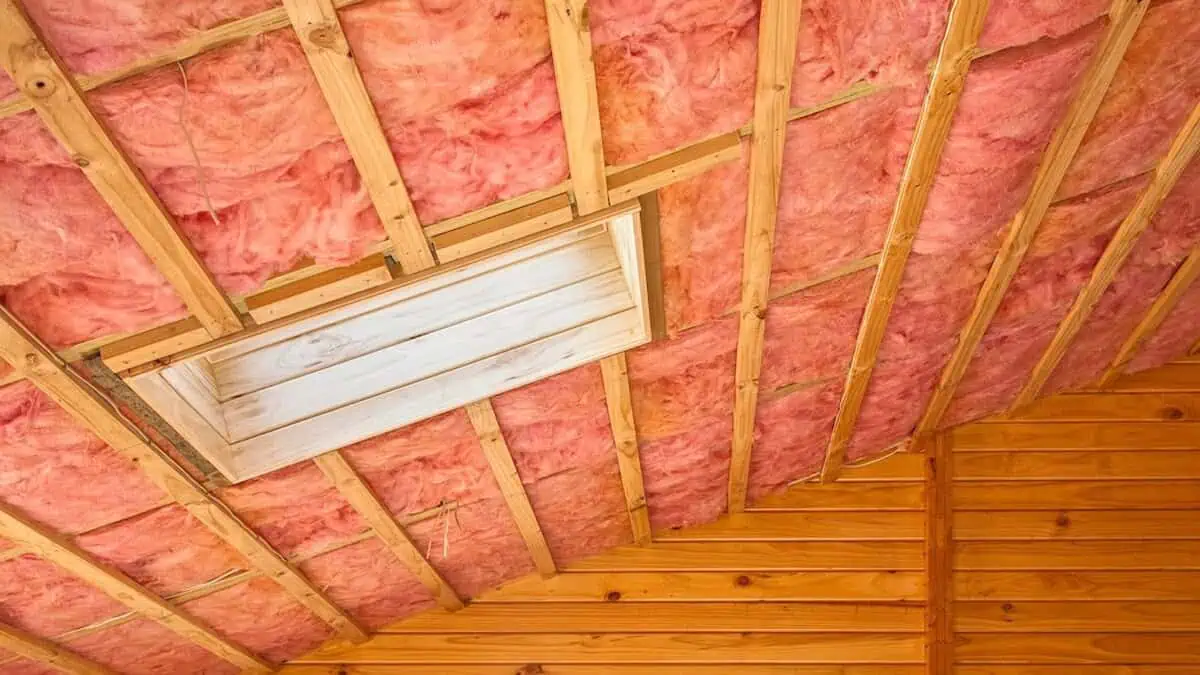
When insulating a home, one of the first questions is whether the insulation should be installed at ceiling level or directly beneath the roof.
Both methods can reduce heat transfer, but they insulate different parts of the building. In a typical home with an unused roof cavity, insulating the ceiling is usually the more practical option because it separates the living space from the hot or cold roof space above.
Roof-level insulation can make more sense where the roof space forms part of the occupied area or where the roof construction has been designed around insulation installed closer to the roof covering.
What Is Ceiling Insulation?
Ceiling insulation is installed directly above the ceiling, usually between or over the ceiling joists.
Its purpose is to create a thermal barrier between the rooms below and the roof cavity above.
During summer, the roof can absorb a large amount of heat. That heat builds up inside the roof space and can then transfer through the ceiling into the home.
Ceiling insulation slows this heat transfer. During winter, it also helps reduce heat escaping from the occupied rooms into the colder roof space.
For many conventional houses, this makes ceiling level one of the most effective places to install insulation.
What Is Roof Insulation?
Roof insulation is installed closer to the roof covering rather than directly above the ceiling.
Depending on the roof construction, it may be installed:
- Between roof rafters
- Beneath roof sheeting
- Beneath roof tiles
- As part of an insulated roof panel
- Above or below sections of the roof structure
This moves the thermal barrier closer to the outside of the building.
If you are comparing different materials and costs, you can also view current roof insulation prices for commonly used insulation options.
Which Is Better for a Typical House?
For a conventional home with a pitched roof and an unused roof cavity, ceiling insulation is usually the logical starting point.
The main reason is that you only need to insulate the boundary around the occupied rooms.
If insulation is installed at roof level instead, a much larger part of the roof structure and roof cavity may effectively fall inside the insulated area.
Ceiling insulation therefore often provides a simpler and more direct thermal barrier between the living space and the roof.
When Does Roof Insulation Make More Sense?
Roof-level insulation becomes more useful when the roof space itself needs to remain within the insulated part of the building.
Examples include:
- Loft conversions
- Attic rooms
- Rooms built into pitched roofs
- Vaulted ceilings
- Exposed roof structures
- Buildings without a conventional ceiling cavity
- Certain new-build roof systems
In these situations, insulating only a horizontal ceiling may leave part of the occupied area outside the thermal envelope.
Can You Insulate Both the Roof and Ceiling?
Yes, but simply adding insulation at both levels is not automatically the best solution.
Roof ventilation, moisture movement and condensation all need to be considered when changing the position of the thermal barrier.
A properly designed system can use insulation at more than one level, but the complete roof and ceiling construction should be considered rather than adding insulation wherever there is available space.
What About Polystyrene and XPS Ceilings?
Polystyrene and XPS ceiling boards already provide some thermal resistance because the material itself slows heat transfer.
However, ceiling boards are generally much thinner than dedicated bulk insulation.
This means an XPS or polystyrene ceiling can be combined with insulation above it to create a layered ceiling system.
The ceiling board provides the finished surface and some thermal resistance, while the additional insulation above it provides a thicker thermal barrier between the room and the roof cavity.
Can XPS Ceilings Replace Roof or Ceiling Insulation?
Not necessarily.
XPS ceiling boards can contribute to the overall thermal performance of the ceiling, but whether they provide enough insulation on their own depends on the board thickness, roof design and required thermal performance.
In many situations, a dedicated insulation layer above the ceiling will provide much greater thermal resistance than relying on the ceiling board alone.
The better approach is to look at the complete roof and ceiling system rather than treating one material as responsible for all of the insulation.
What About Sound?
This is another area where different materials perform different jobs.
Rigid foam materials such as XPS and polystyrene provide useful thermal resistance, but they are not particularly effective at absorbing airborne sound.
Fibrous insulation such as glasswool can absorb sound energy within the ceiling cavity and can therefore improve the acoustic performance of the ceiling system.
For homes where both thermal performance and sound absorption are important, combining a rigid ceiling board with fibrous insulation above it can provide a more complete solution.
Does the Roof Still Get Hot With Ceiling Insulation?
Yes.
Ceiling insulation does not stop the roof covering itself from heating up.
Roof tiles or metal roof sheeting will still absorb heat from the sun, and the roof cavity can become very warm.
The purpose of ceiling insulation is to reduce how quickly that heat reaches the rooms below.
This is why it is not always necessary to keep the entire roof cavity cool in order to improve indoor comfort.
What About Metal Roofs?
Metal roof sheeting can heat up quickly in direct sunlight.
In some roof systems, insulation or reflective materials are installed directly beneath the roof sheeting to help reduce heat entering the roof cavity.
Ceiling insulation can then provide an additional barrier between the roof cavity and the living space below.
Whether one or both methods are appropriate depends on the roof design and whether the insulation is being installed during construction or added later.
Which Option Is Easier to Retrofit?
Ceiling insulation is often easier to add to an existing home.
If there is suitable access to the roof cavity, insulation can frequently be installed above the existing ceiling without removing the roof covering.
Roof-level insulation may require roof sheets, tiles or other components to be removed or altered depending on the construction.
For this reason, installing insulation at ceiling level is often the more practical retrofit option.
Should You Insulate the Ceiling or the Roof?
For most conventional homes with an unused roof cavity, ceiling insulation is usually the best place to start.
It creates a thermal barrier directly above the occupied rooms and avoids unnecessarily insulating the entire roof cavity.
Roof-level insulation is more suitable where the roof space forms part of the living area or where the building has been specifically designed with an insulated roof system.
In some cases, both approaches can work together.
The right choice ultimately depends on the roof construction, ceiling design and which part of the building needs to remain inside the insulated envelope.
Shop Summit XPS Ceiling Boards
Looking for Summit XPS ceiling boards? We supply three thickness options:
- 30mm Summit XPS – Lightweight XPS ceiling board for ceiling applications.
- 40mm Summit XPS – A thicker board offering improved thermal resistance.
- 50mm Summit XPS – Our thickest Summit XPS ceiling board for higher thermal performance.
More Ceiling Guides
Looking for more insulation guides? Browse our articles covering ceiling insulation, roof insulation, thermal performance and how insulation works with different ceiling systems.